
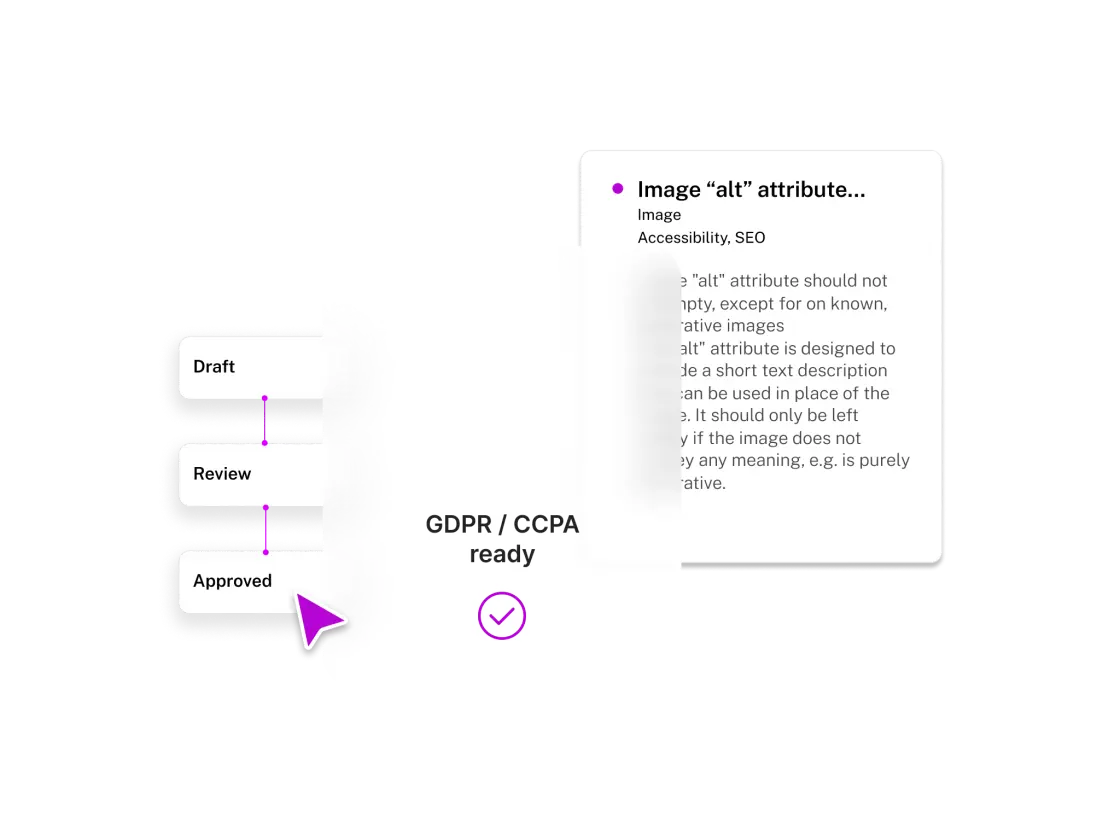
FirstSpirit provides a robust platform with features designed to help you meet these challenges and deliver compliant digital experiences .
The Challenges of Regulatory Compliance:

Data Privacy
Adhering to various regulations and legal frameworks such as the General Data Protection Regulation (GDPR), the California Consumer Privacy Act (CCPA), and other similar laws that dictate the procedures surrounding the collection, storage, and utilization of personal data is essential. These regulations set forth guidelines to ensure that personal information is handled responsibly and ethically, safeguarding individuals' privacy rights while also outlining the obligations of organizations in managing sensitive data.

Accessibility
Meeting web accessibility standards, specifically the Web Content Accessibility Guidelines (WCAG), is essential to ensure that websites are fully usable and navigable by individuals with disabilities.
These guidelines provide a comprehensive framework aimed at making web content more accessible, ensuring that everyone, regardless of their abilities or impairments, can easily access and interact with online information and services.
Adhering to these standards not only promotes inclusivity but also enhances the overall user experience for a diverse audience.

Content Governance
Establishing thorough and systematic processes for the creation, approval, and publication of content is essential in order to uphold a high standard of accuracy. This is crucial not only for maintaining the credibility of the information presented but also for mitigating potential legal issues that could arise from the dissemination of inaccurate or misleading content. By implementing well-defined procedures, organizations can ensure that every piece of content undergoes rigorous scrutiny and meets established guidelines before it is made available to the public. Such diligence is key to fostering trust and providing reliable information while protecting against legal ramifications that may stem from publishing errors or content that does not comply with relevant regulations.

Security
Protecting digital assets and safeguarding customer data from a wide range of cyber threats is an increasingly critical concern in today’s technology-driven world. As businesses and organizations continue to rely heavily on digital infrastructure, the importance of implementing robust security measures to defend against potential breaches, hacking attempts, and other malicious activities cannot be overstated.
It is essential for companies to invest in comprehensive cybersecurity strategies that not only protect their own assets but also ensure the privacy and security of their customers' sensitive information. By prioritizing the protection of digital assets and customer data, organizations can build trust with their users and create a safer online environment for everyone involved.

Record Keeping
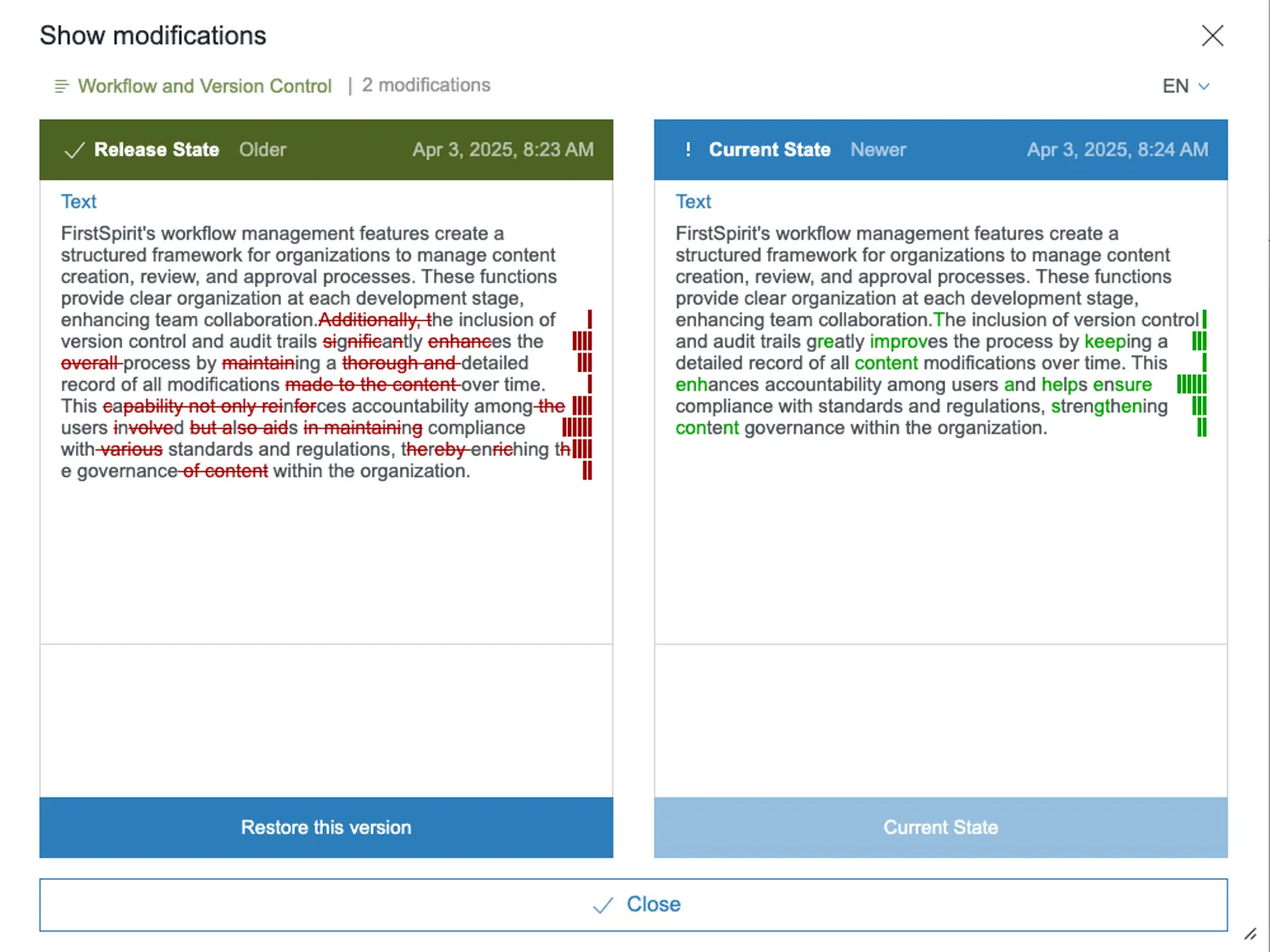
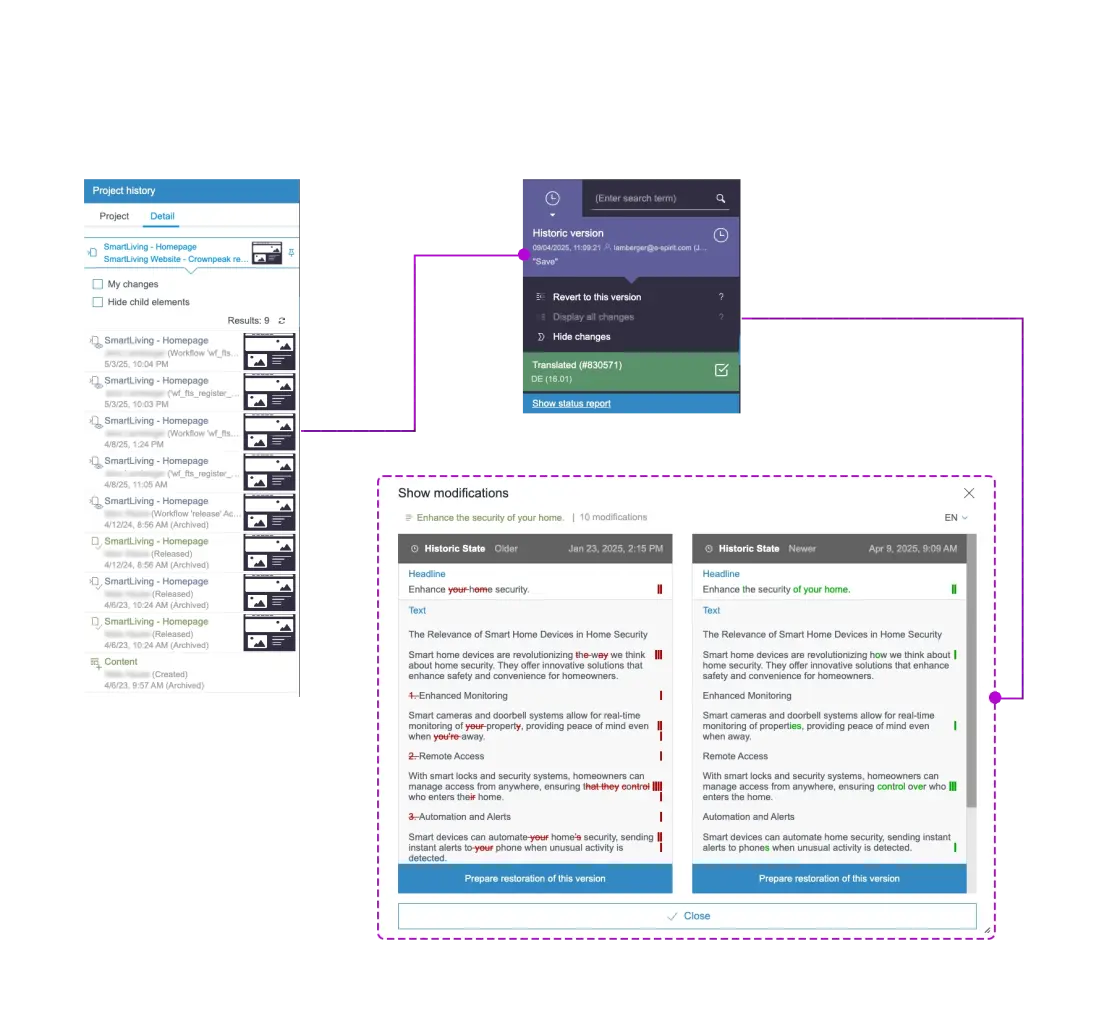
Maintaining a comprehensive and accurate record of all content changes, as well as user interactions, plays a crucial role in ensuring that extensive audit requirements are met. This involves documenting every alteration made to the content, whether that be updates, deletions, or additions, along with tracking the various interactions users have with this content. Such meticulous record-keeping is essential for transparency and accountability, providing a clear trail that can be reviewed during audits. By implementing a systematic approach to capturing these details, organizations can not only safeguard their operations but also enhance their ability to respond to any inquiries or concerns that may arise regarding their content management practices.
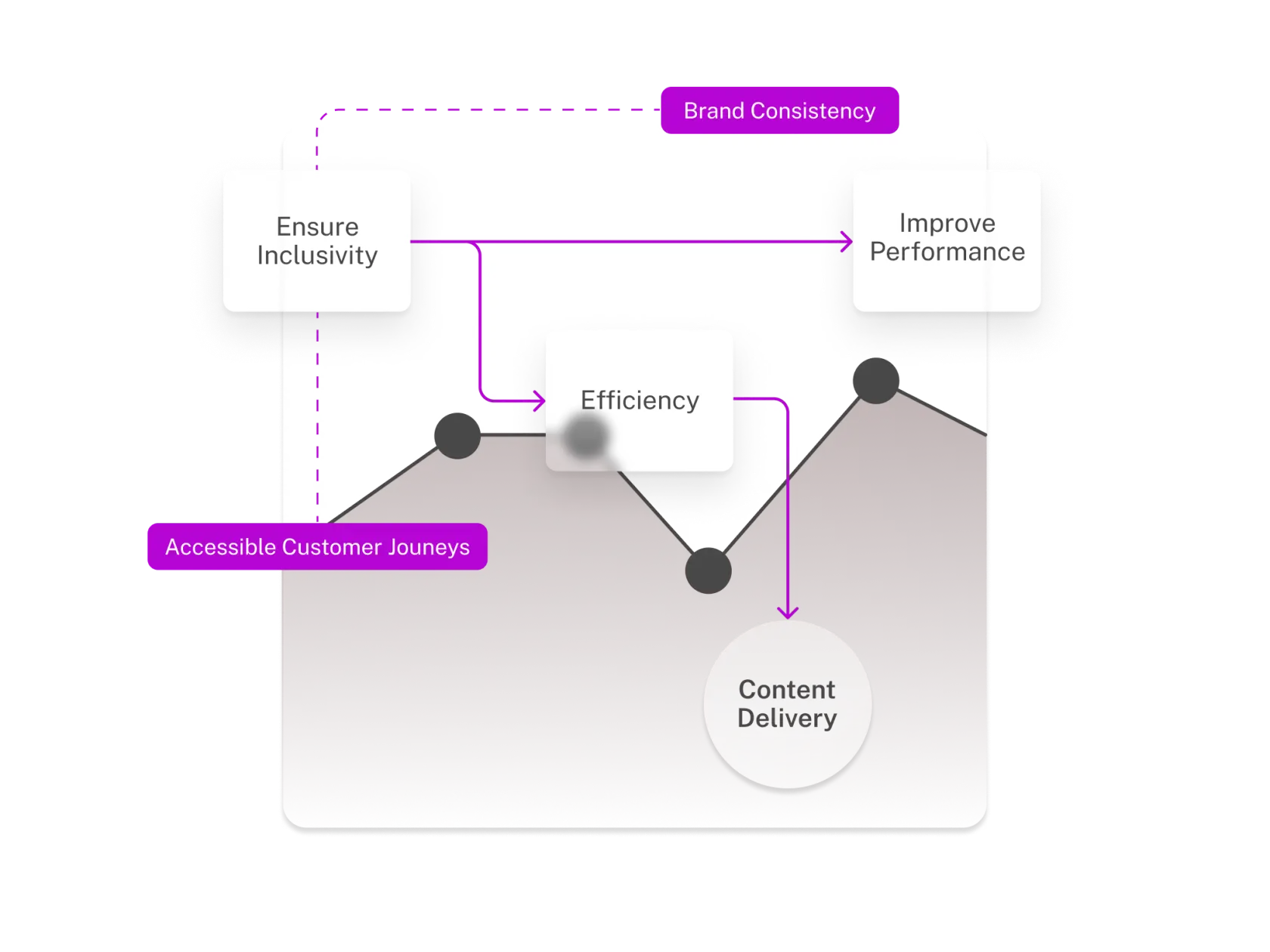
FirstSpirit offers a range of features and capabilitie s that can help organizations address these compliance challenges:


Benefits of Using FirstSpirit for Regulatory Compliance:

Reduced Risk:
Minimize the risk of legal penalties and reputational damage by ensuring compliance with relevant regulations.

Increased Trust:
Build trust with your customers by demonstrating your commitment to data privacy and accessibility.

Improved Efficiency:
Streamline content governance processes and reduce the effort required to maintain compliance.
Enhanced Accessibility:
Reach a wider audience by making your digital experiences accessible to everyone.